Combining cycling with Public Transportation
Public transport
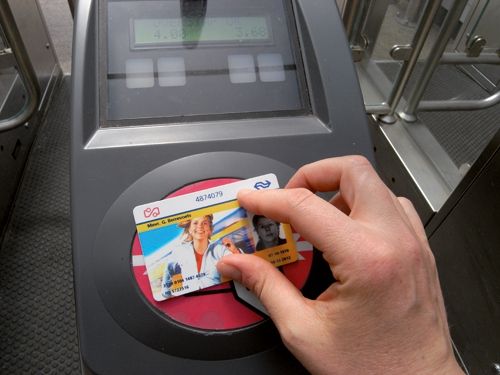
Public transport (abbreviated ‘OV’ for ‘Openbaar Vervoer’ in Dutch) is available to all, and can be found all over the world! Public transportation in the Netherlands includes traveling by train, bus, tram, metro, and ferry. To gain access to public transportation in the Netherlands, we often use a public transport card, called the "OV-chipkaart".
Since June of 2023, you can also use your bank card, to travel with public transport through the whole of the Netherlands. They accept Dutch banks, but also international contactless creditcards such as Maestro, VPAY, Mastercard and Visa. This makes travelling by public transport easy and convient. Be aware that when you pay with your bank card, you pay the full tarif. It is not possible yet to get the discounts such as travelling outside peakhour when travelling using your bank card. In that case the OV-chipkaart is your best choice.
Click here for more information about using the OV-chipkaart and your bank card for travelling with publlic transport.
What is the ‘OV-chipkaart’?
The OV-chipkaart translates into ‘public transport chip card’. It is a payment method for the Dutch public transport system. It is the size of a credit card and contains an invisible chip. You can load money onto the card, which allows you to freely check in and out of the public transport system across the Netherlands. Alternatively, you can load a single trip or subscription onto the card. Topping up your OV-chipkaart is possible at a fysical machine (at most metro and train stations) or online.
Click here for more information.
Public transport in Wageningen
Traveling by public transport is easy in Wageningen! Although Wageningen itself has no train station, you can access the city best via the nearest train station in Ede (NS station Ede-Wageningen) and catch a bus from there to the city centre or University.
Route planner
Use a route planner to plan your trip! Fill in your origin and destination and the time of departure or arrival, and the website will present a detailed trip. These handy travel planners are listed here:
- 9292OV
- NS.nl
- Google Maps
- OVinfo app. Travelapp for people who have visual or physical impairments.
- ANWB Fietsrouteplanner
Traveling door to door by bicycle (first and last mile)
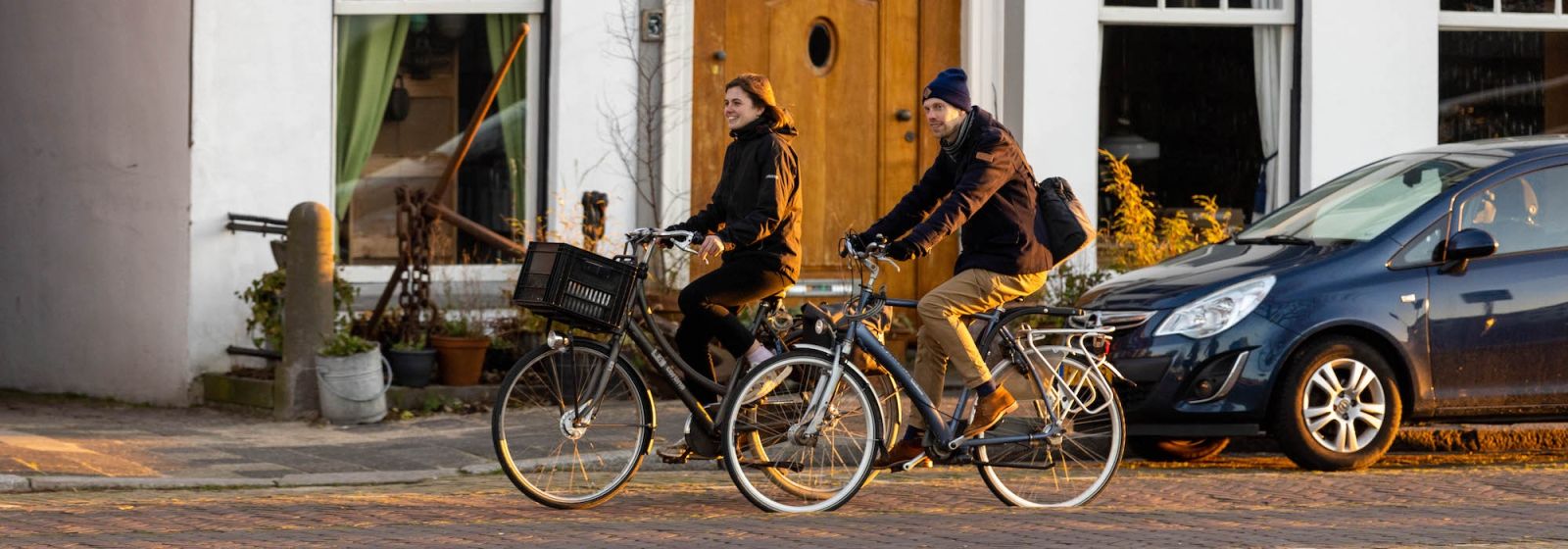
There are many transportation modes you can use to for the first and last mile of your journey, like the bus, tram and metro. The most popular method however is the bicycle. You can use your own bicycle for this purpose, or rent a bicycle available specifically for this part of your journey. Please click here to find more information on where to rent a bicycle for this purpose.
A folding bike is also used often by commuters and students alike in public transportation. It is literally a bicycle that can be folded in order to make it easier to transport. It provides you with a solution for the first and last mile that you can always take with you on the train or bus for free.
Taking a regular biclcyle on the train does come with some requirements:
- Only the following bicycle types are allowed: a regular, electric, racing and mounting bike. Notice that a electric fatbike is also a allowed when it has a battery that goes up to a maximum capacity of 250 watt hours. Click here for more info on the electrical fatbike.
- You have to buy a separate ticket for your bicycle which costs €7,95.
- You can only bring your bicycle during off-peak hours. Between 09:00 a.m. to 4:00 p.m.
- You can only enter the train in non-peak hours en at the section of the train that shows the bycicle sign. There are designated locations for the bicycle.
- Not having a valid train ticket for your bicycle can lead to a fine of €70.
Click here to find more information on how and when to take your bike with you on the train.